
Florida Product Approval vs. Miami-Dade NOA: What Homeowners Should Know
Florida product approval is the statewide system, searchable at floridabuilding.org, showing a window or door meets the Florida Building Code. A Miami-Dade Notice of Acceptance (NOA) is a separate county approval using the stricter protocols required in the High-Velocity Hurricane Zone. Tampa Bay and Southwest Florida are outside that zone, but NOA products are commonly used.
What Is Florida Product Approval?
Windows, exterior doors, garage doors, skylights, and shutters installed in Florida must be approved for use under the Florida Building Code. Most manufacturers use the statewide Florida product approval system, administered by the Florida Building Commission. Local approval by a building official is possible in some cases.
What Is a Miami-Dade Notice of Acceptance (NOA)?
Miami-Dade County runs its own product control program. A product that passes its testing and review receives a Notice of Acceptance with a file number such as 21-0101.01, tested to protocols the county has long used for the High-Velocity Hurricane Zone.
What Is the High-Velocity Hurricane Zone (HVHZ)?
The Florida Building Code defines the HVHZ as Miami-Dade and Broward counties, where products must meet HVHZ testing and approval requirements.
Our service area (Pinellas, Pasco, Hillsborough, Hernando, Lee, Charlotte, Sarasota, and Manatee counties) is not in the HVHZ. Homes here still must meet Florida Building Code wind requirements, and many are in the wind-borne debris region, where impact-resistant products or approved protection is required. See our impact window permits guide.
How to Look Up a Florida Product Approval Number
Find the number
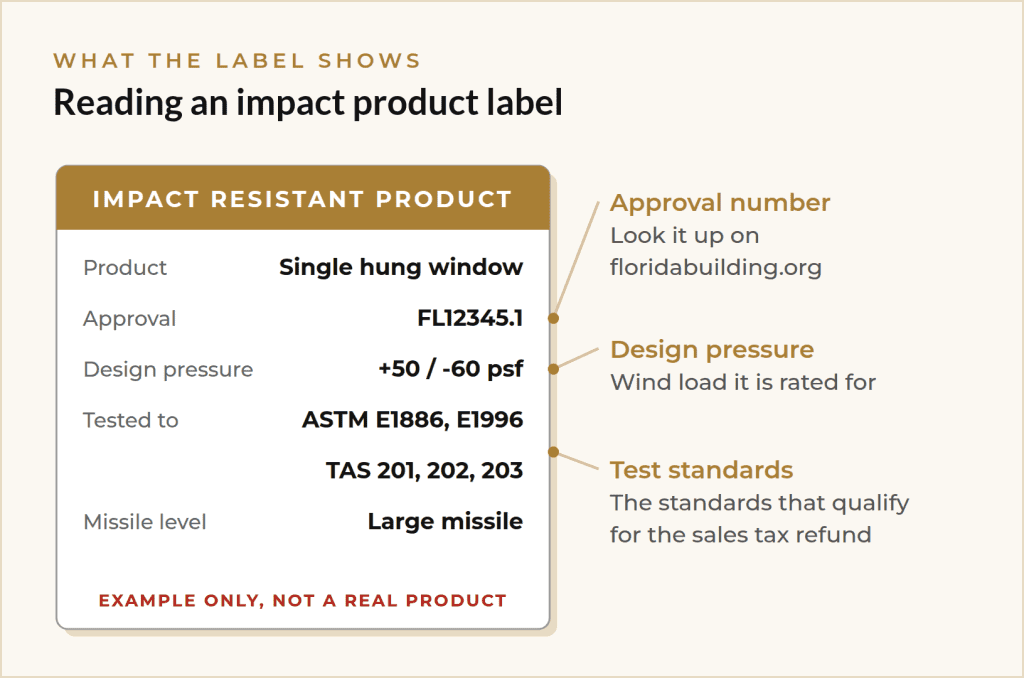
On your quote, invoice, permit documents, or product label.
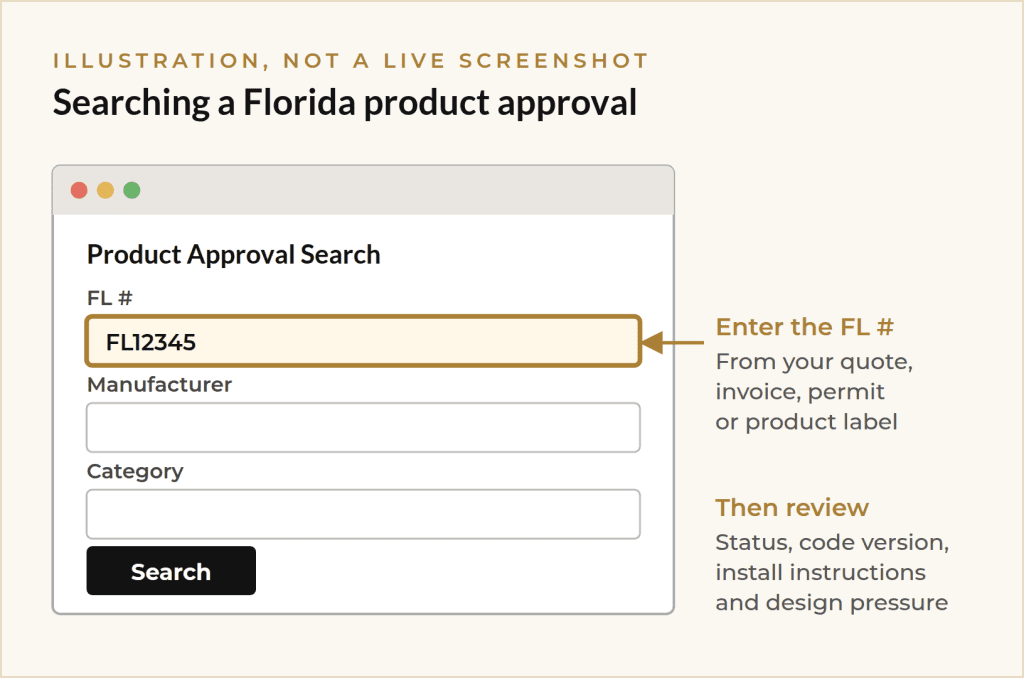
Open the Florida Building Commission's Product Approval search
Enter the FL number
In the “FL #” field, or search by manufacturer.
Review the approval
Status, code version, installation instructions, and design pressure limits.
For an NOA
Use Miami-Dade County’s Product Control Search and enter the file number, or search by applicant, category, impact rating, or design pressure.
Compare the details
To your quote: product type, size limits, and rated design pressure.
What Does Design Pressure (DP) Mean?
Design pressure is the wind load, in pounds per square foot (psf), a window or door is certified to withstand, listed as positive (wind pushing in) and negative (suction pulling out). A listing such as +50/-60 psf means the product was rated to those loads.
- Your location's design wind speed.
- Building height and roof shape.
- Exposure category (open coastline versus sheltered neighborhood).
- Where the opening sits on the wall. Openings near corners typically see higher loads.
The permit and, when required, an engineer or the approval tables set what each opening needs. Size matters too: the same product line may carry a lower rating in larger sizes. Storm Pro’s products are rated for design pressures associated with 150 to 175 mph winds, depending on product and size.
Large and Small Missile Impact Tests
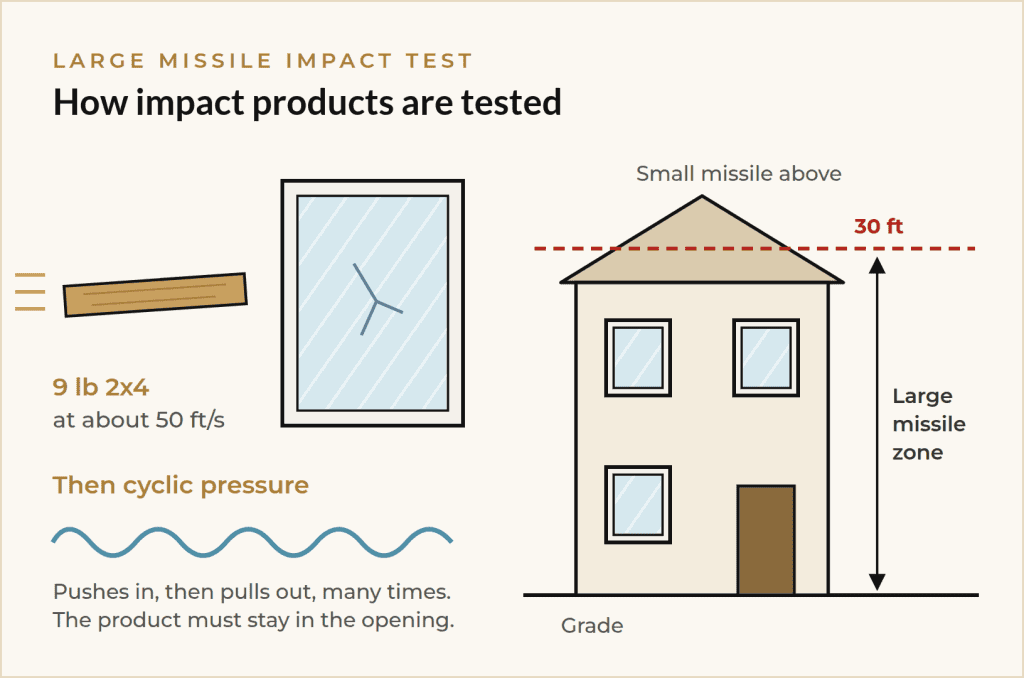
- Missile impact. In the large missile test, a 9-pound 2x4 is fired at about 50 feet per second at the glass and frame. Large missile ratings apply to openings within 30 feet of grade, which covers most openings on one and two story homes. Small missile testing, using small steel balls to simulate roof gravel, applies to higher openings.
- Cyclic pressure. After impact, the product goes through repeated cycles of positive and negative pressure simulating hurricane gusts, and must stay in the opening without tears or openings beyond allowed limits.
Standards you may see include Florida Building Code TAS 201, 202, and 203, ASTM E1886 and E1996, and AAMA 506 for windows and doors, and ANSI/DASMA 115 for garage doors. These same standards qualify products for the impact window sales tax refund.
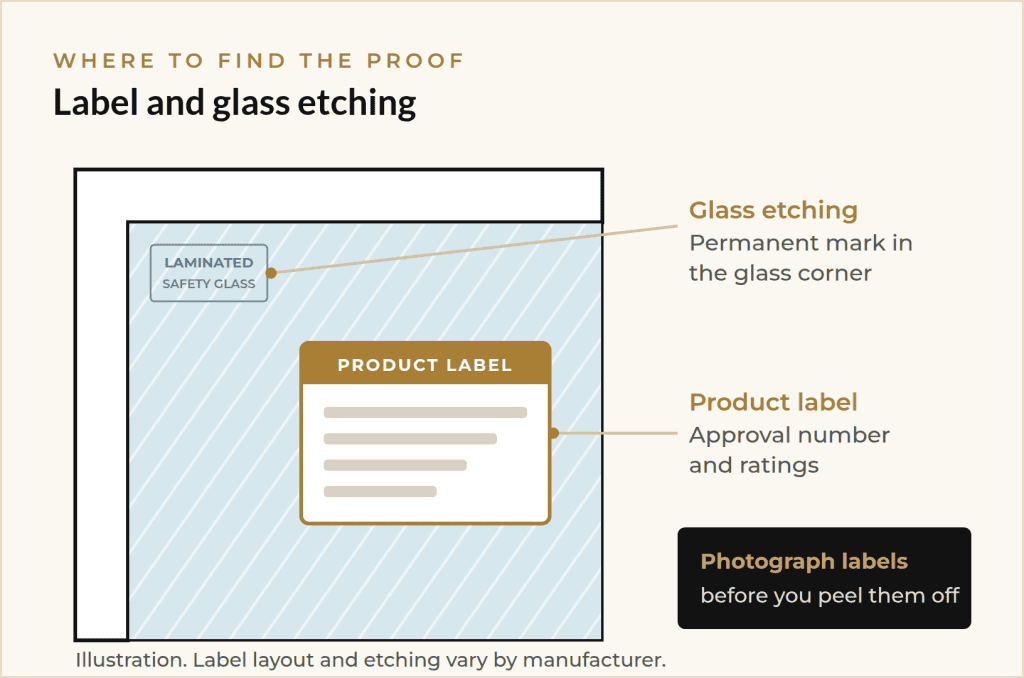
Labels and Etching to Look For
- A manufacturer label on the frame or glass showing the manufacturer, product series, and performance data such as design pressure and impact rating.
- The Florida product approval or NOA number on the label or in the paperwork.
- Permanent glass etching in a corner of many laminated impact products, identifying the manufacturer or glass type.
Photograph the labels before they are removed. Inspectors, insurers, and future buyers may ask for proof, and inspectors use these records for wind mitigation insurance discounts.
How Storm Pro Handles Florida Product Approval Paperwork
Storm Pro Window and Door installs impact windows and doors from manufacturers including PGT, CWS (Custom Window Systems), Simonton, Masonite, Plastpro, and Advisar (brands we install). Our quotes list the product for each opening, and we provide approval numbers for your permit, insurance, and grant records. As a Florida-licensed contractor (CRC1334277), we pull the permit that ties those approvals to your address, and we never install in rotted or structurally unsound frames. Explore our impact windows and impact doors.
This page is general information, not code or legal advice. Product requirements for your address are set by your local building official.
- Quotes list the product for every opening
- Approval numbers for your permit, insurance and grant records
- Florida-licensed contractor (CRC1334277) pulls the permit
- Never installed into rotted or unsound frames
Official Sources
Every rule, number and deadline on this page comes from the agencies below. Check them directly anytime.
01
02
03
04
05
Frequently Asked Questions
Is a Miami-Dade NOA better than Florida product approval?
Not automatically. An NOA is required in the High-Velocity Hurricane Zone and uses Miami-Dade’s protocols, so NOA products are widely trusted. Outside Miami-Dade and Broward, a product with valid Florida product approval and the right design pressure for your openings meets code. The rating for your specific openings matters most.
Do I need NOA windows in Tampa or Fort Myers?
No. Tampa Bay and Southwest Florida are not in the High-Velocity Hurricane Zone, so an NOA is not required. Products need valid Florida product approval or local approval and must meet the design pressure and impact requirements for your address. Many products carry both approvals.
How do I check if my impact windows are approved?
Find the FL number on your invoice, permit, or label, then search it on the Florida Building Commission’s product approval site at floridabuilding.org. For NOA numbers, use Miami-Dade County’s Product Control Search. Confirm the product type, status, and design pressure limits match your installation.
What design pressure do I need for my windows?
It depends on your home’s location, height, roof shape, exposure category, and where each opening sits on the wall. Openings near corners usually need higher ratings. Your contractor determines the requirement through the permit process using the code and approval tables, and an engineer may be involved for some homes.
What is the large missile impact test?
A 9-pound 2×4 is fired at about 50 feet per second into the window or door, followed by thousands of cycles of positive and negative pressure. Large missile ratings apply to openings within 30 feet of grade. Passing products are listed as impact resistant in their approvals.
Why do I need approval numbers after installation?
Wind mitigation inspectors need them to credit opening protection, the sales tax refund depends on qualifying test standards, and buyers and insurers may ask later. Unverified products can be rated lower on the wind mitigation form, so keep the numbers with your permit records and label photos.