
Energy Efficient Impact Windows for Florida Homes
Energy efficient impact windows combine laminated glass with Low-E coatings, argon gas fill, and tight-sealing frames to limit the heat entering your home. In Florida, the key number is usually the Solar Heat Gain Coefficient (SHGC). Storm Pro Window and Door shows you these ratings for every window in your quote.
Why Does Window Efficiency Matter in Florida?
In a cooling climate, the job of a window is to keep heat out. Sunlight through glass is a major source of the heat your air conditioner has to remove, and older single-pane or clear glass lets much of it through.
Most homeowners upgrade for hurricane protection. Because the glass and frame are being replaced anyway, it is the right time to choose energy efficient impact windows that also cut your cooling load.
- In a cooling climate, windows should keep heat out
- Old single-pane or clear glass lets heat through
- Replacing for hurricanes? Upgrade efficiency at the same time
- Lower cooling load for your AC
What Makes Energy Efficient Impact Windows Work?
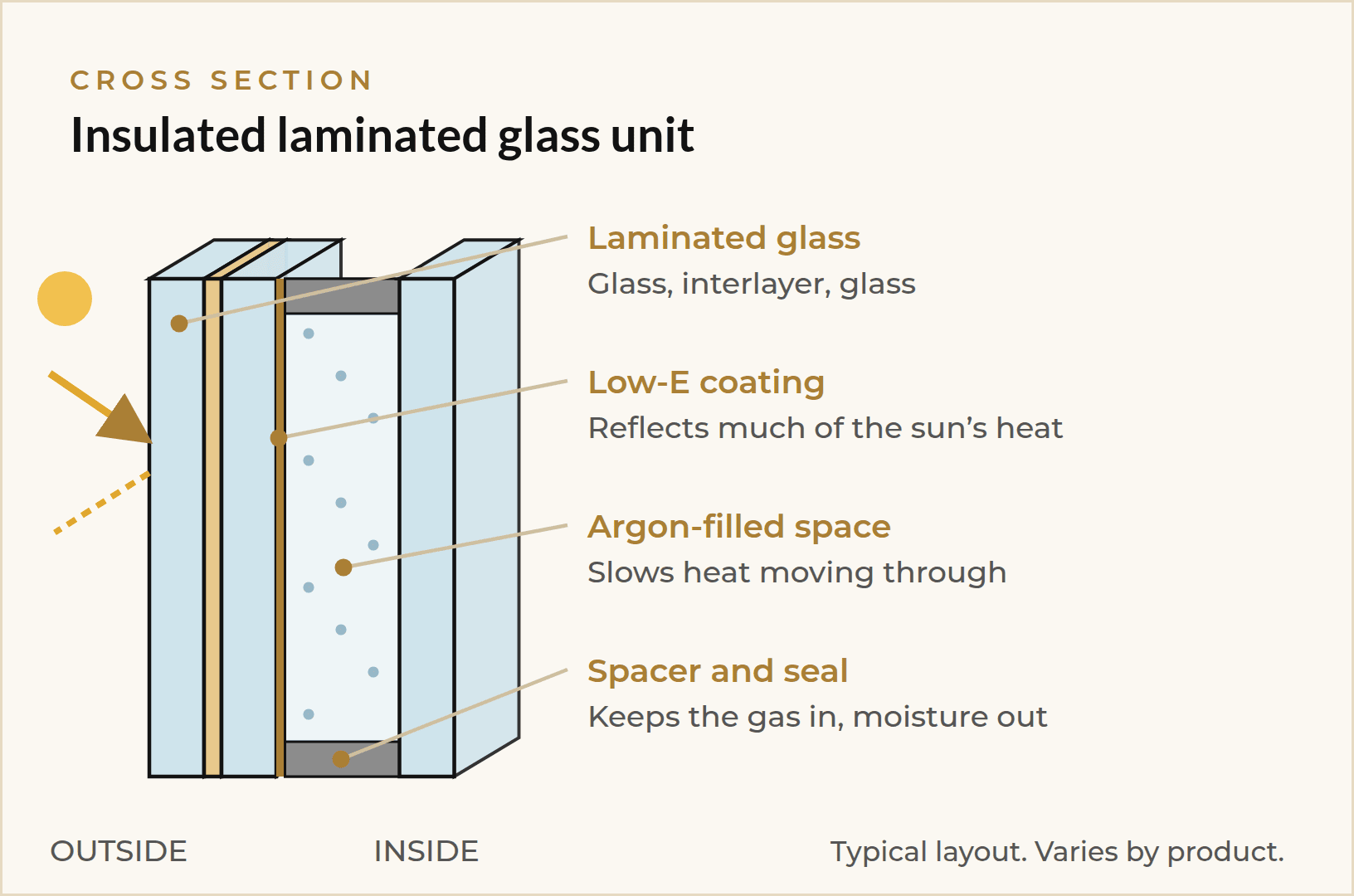
Low-E coatings. Thin, nearly invisible metallic layers reflect much of the sun’s infrared heat while letting visible light through. Formulas vary, so compare ratings for each option. See The Guide to Window Glass Coatings for Florida Impact Windows.
Insulated glass and argon. Some impact windows use an insulated glass unit (IGU): two layers of glass, at least one laminated, with a sealed space between. Argon in that space slows heat transfer.
Laminated glass and UV. The interlayer filters ultraviolet light, the main cause of fading floors and fabrics, and it dampens outside noise.
Frames and seals. Vinyl does not conduct heat the way metal does. Aluminum is slimmer but conducts heat unless it has a thermal break. Air leaking around a window carries heat and humidity with it.
How Do You Read an NFRC Label?
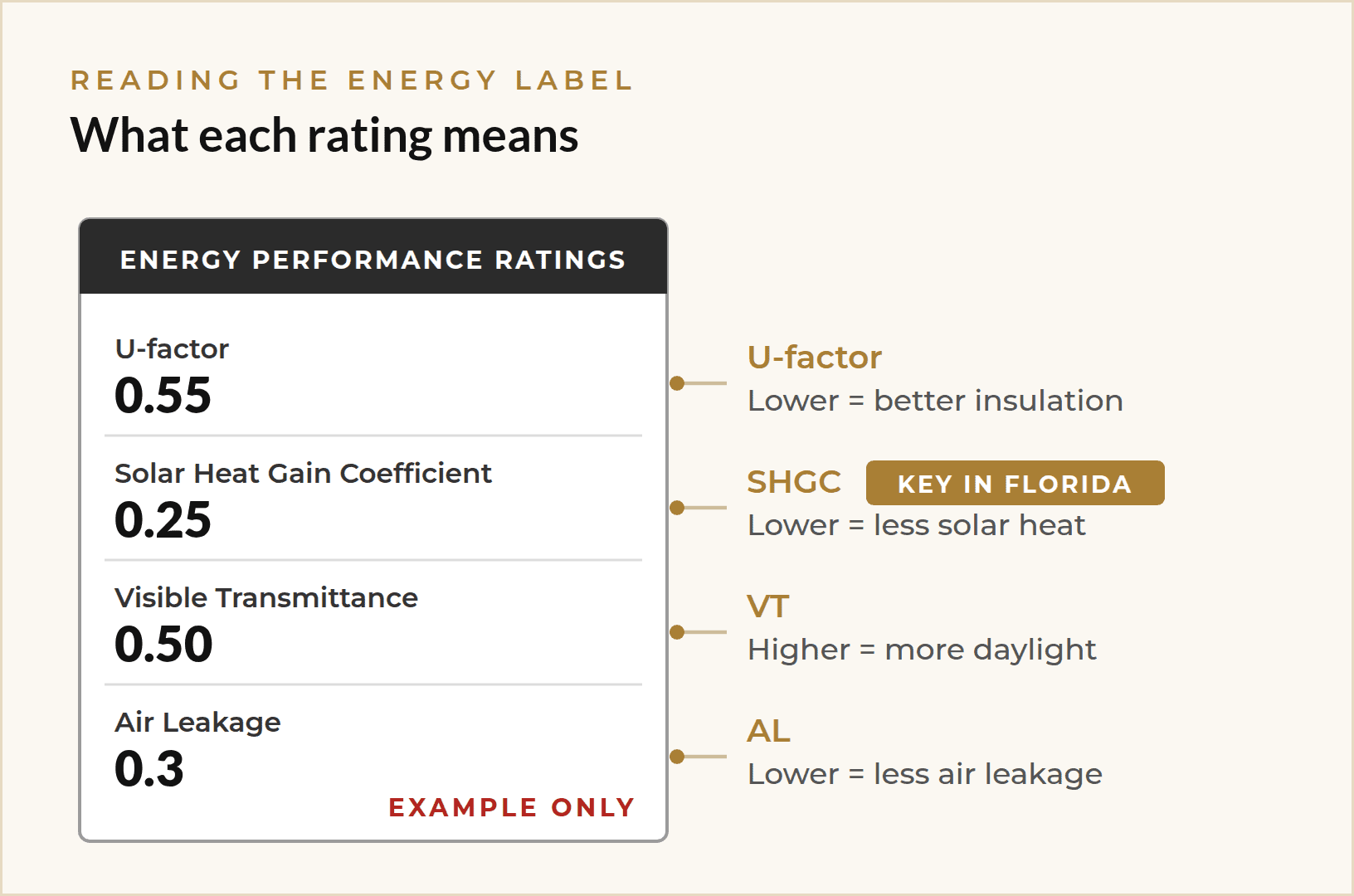
The National Fenestration Rating Council (NFRC) is an independent organization that rates windows and doors so you can compare them on equal terms. Look for four values:
U-factor: how well the window resists heat transfer. Lower is better.
SHGC: the fraction of the sun’s heat that passes through, from 0 to 1. Lower means less heat. For Florida, this usually matters most.
Visible Transmittance (VT): how much daylight passes through, from 0 to 1. Higher means brighter rooms.
Air Leakage (AL): how much air passes through the assembly. Lower is tighter. This rating is optional.
Compare these numbers for the same size and style. A low SHGC with a reasonable VT gives you less heat without dark rooms.
Are Storm Pro's Impact Windows ENERGY STAR Certified?
ENERGY STAR is a U.S. Environmental Protection Agency program that sets maximum U-factor and SHGC values by climate zone. Florida is in the Southern zone, where limiting solar heat gain is the priority. Certification depends on the specific product, glass package, and configuration. Ask us to show the rating for the exact windows in your quote.
- EPA program with U-factor and SHGC limits by zone
- Florida is in the Southern zone
- Certification depends on product and glass
- Ask us for the rating on the windows in your quote
Which Rooms Benefit Most From Energy Efficient Impact Windows?
West-facing rooms
That heat up in the afternoon
Large picture impact windows
Facing the pool or water
Upstairs bedrooms
Which often run warmer
Rooms with wood floors, rugs, or artwork
You want to protect from fading
How Does Installation Affect Efficiency?
Even energy efficient impact windows underperform if they are not sealed to the opening. Storm Pro’s in-house crews set, anchor, and seal each window per its product approval, and we will not install into rotted framing. See our impact window installation process.
Do Energy Efficient Impact Windows Save Money?
They can reduce the heat your air conditioner has to remove, but savings depend on your home’s size, orientation, insulation, AC system, habits, and the windows being replaced. We do not quote a fixed savings number, because no installer can honestly promise one without an energy analysis. We do help you choose glass suited to each side of your home.
- Every window sealed to the opening
- Anchored and sealed per its product approval
- No fixed savings promises without an energy analysis
- Glass chosen for each side of your home
Frequently Asked Questions
What is the most important energy rating for Florida windows?
For most Florida homes, the Solar Heat Gain Coefficient (SHGC) matters most, because keeping solar heat out is the main job of windows in a cooling climate. Lower SHGC means less heat gets in. U-factor and air leakage also matter, so compare all three on the NFRC label.
Is argon gas worth it in Florida?
Argon slows heat transfer through an insulated glass unit, which improves U-factor. In a hot climate the benefit is real but usually smaller than a good Low-E coating. Availability depends on the product and glass package you choose.
Do impact windows block UV rays?
The laminated interlayer filters much of the ultraviolet light that fades floors, fabrics, and artwork. The exact amount varies by product and glass package, so check the manufacturer’s specifications for the windows in your quote.
Will tinted glass make my rooms dark?
It depends on the tint and coating. Check Visible Transmittance (VT), where higher numbers mean more daylight. Many Low-E coatings cut heat while keeping glass fairly clear. You can compare samples at our Tarpon Springs showroom.
Can I get help paying for energy efficient impact windows?
Storm Pro offers 0% financing with approved credit. Eligible homeowners may also qualify for a My Safe Florida Home grant, which covers impact windows as a wind mitigation improvement. See our My Safe Florida Home guide and our cost guide.