
Casement Impact Windows
Casement impact windows are hinged on one side and crank outward like a door. The open sash catches passing breezes, and when locked it presses against its weatherstripping for a tight seal. Storm Pro Window and Door custom builds casements with laminated impact glass and installs them with our own crews.
How Does a Casement Window Work?
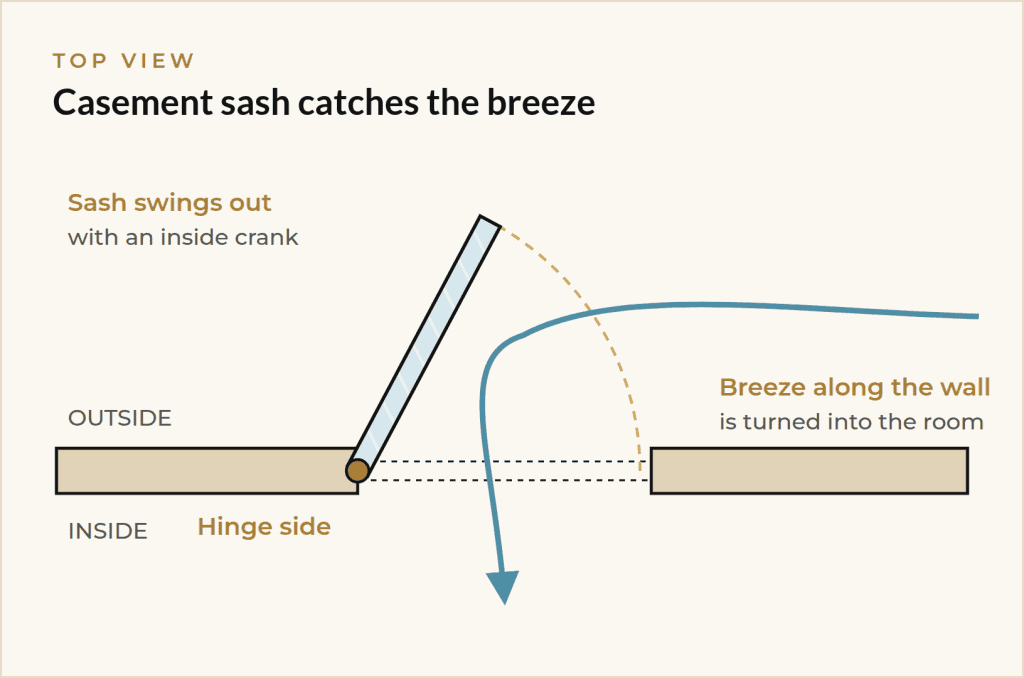
A casement sash is hinged on the left or right. Turning the inside crank swings it outward, a little or all the way. When you close and lock it, the sash pulls tight against the frame and compresses the weatherstripping.
Casements come as single units or as pairs that open like French doors.
Choosing Casement Impact Windows
Why casements lead on airflow, what to know about egress, and the options you can choose for each opening.
Why Choose Casement Impact Windows for Airflow?
The open sash sits at an angle to the wall, so it acts like a sail and directs breezes that would otherwise slide along the house into the room. Place casement impact windows on opposite walls and you can set up a true cross breeze. They are a good fit for:
Living and great rooms
You want to open up on a mild day
Spots over a kitchen counter
Where a crank is easier than lifting a sash
Contemporary and coastal homes
Where a single sash with no meeting rail looks clean
Ventilation and Bedroom Egress
Because the whole sash swings open, a casement provides more open area than a single hung or slider of the same size. That can make it easier to meet the Florida Building Code’s emergency escape rules for bedrooms. The clear opening depends on the hinge hardware, so every bedroom window is checked during measurement and confirmed through the permit.
Since the sash swings outward, one that opens onto a walkway or screened lanai can get in the way. We flag those conflicts during your consultation.
- Whole sash swings open for more open area
- Can make bedroom egress easier to meet
- Every bedroom window checked at measurement
- Conflicts with walkways or lanais flagged up front
Casement Options
Frames
Vinyl or aluminum
Glass
Laminated impact glass with Low-E and argon available (see energy efficient impact windows)
Privacy
Tinted or obscure glass
Grids
Classic applied, between-the-glass, or double applied
Hardware
Crank and lock hardware in coordinating finishes
Screens
Interior screens, since the sash swings out
Installation and Care
How our in-house crew installs casement impact windows, and how to keep the crank and hinges working smoothly.
How Does Storm Pro Install Casements?
Casement impact windows need precise, square installation so the sash seals evenly along every edge. Our in-house crew sets each unit level and plumb and anchors it to the fastener pattern in its product approval. We will never install into rotted or structurally unsound framing.
We secure the permit, protect your floors, and clean up before we leave. The work is backed by our lifetime workmanship warranty. See the full impact window installation process.
- Set level and plumb so the sash seals evenly
- Anchored to its product approval fastener pattern
- Permit secured, floors protected, site cleaned up
- Lifetime workmanship warranty
How Do You Care for a Casement Window?
- Wipe the weatherstripping and check that it is not torn or flattened.
- Keep the hinge track and operator clear of sand.
- Clean glass with a mild, non-abrasive cleaner.
- Close and lock casements before storms.
- Do not force the crank past its stop.
What Pairs Well With Casement Windows?
A classic arrangement places a large picture window in the center with a casement on each side: an unbroken view plus airflow on both ends. Casements also pair with awning windows above or below, since both are crank operated.
Frequently Asked Questions
Are casement impact windows safe to leave open in a storm?
No window should be left open in a storm. Close and lock casements before severe weather. Impact windows are tested closed and locked, and locking pulls the sash tight against the seals so it performs as designed.
Do casement windows seal better than sliders?
Casements close by compressing the sash against weatherstripping, which can create a tight seal. Air leakage varies by product, so compare the rating on the NFRC label when listed. Proper installation matters as much as the window itself.
Where should I avoid casement windows?
Avoid them where the outward-swinging sash would block a walkway, hit a lanai screen, or open into a busy patio. There, a horizontal slider or single hung is often a better fit. We review each opening during your in-home quote.
Are casement windows harder to maintain?
Not really. They have a crank and hinges, so there are a few more moving parts than a fixed window. Keeping the hinge track clean and not forcing the crank goes a long way.